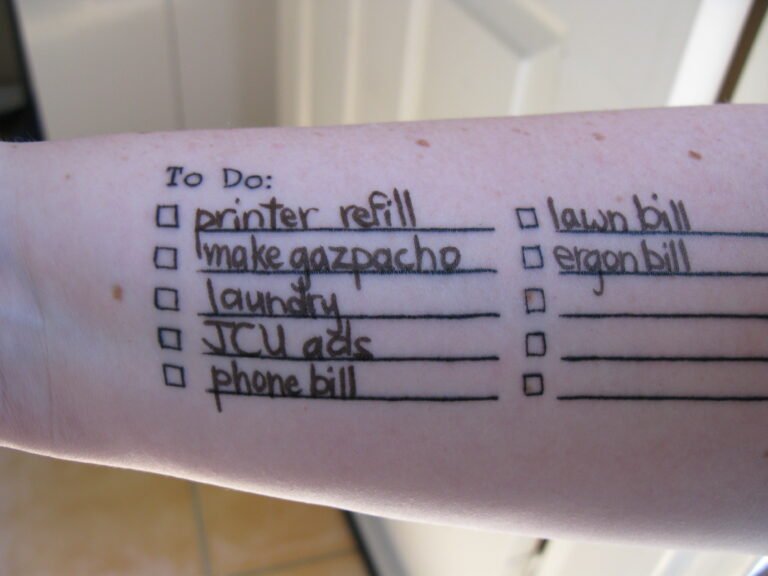
The Real Reason To-Do Apps Don’t Fix Procrastination
There is a familiar cycle: download a new to-do app, feel productive while setting it up, and procrastinate on the same tasks a week later. It happens so often that it is worth asking why a better list has so little effect on getting things done.
The short answer is that the list was never the problem. This post looks at what is actually going on, what the research says, and what tends to work instead.
Procrastination is not a memory problem
To-do apps solve one specific problem: forgetting what you need to do. But most procrastination is not caused by forgetting. It is caused by avoiding something you remember perfectly well. Reminders, color-coded priorities, and due-date notifications do not address avoidance, because avoidance was never about visibility.
What is usually driving the avoidance
Research on procrastination points to emotion rather than time management. In a widely cited 2013 paper, Fuschia Sirois and Timothy Pychyl described procrastination as a way of prioritizing short-term mood over long-term goals. A task that triggers boredom, anxiety, self-doubt, or frustration produces a bad feeling, and putting it off gives immediate relief. That relief is a much stronger pull than a due date is a deterrent.
Behavioral economics adds another layer. In Piers Steel’s analysis of the procrastination literature, people delay more when a task is unpleasant, when the reward is far away, and when they have low confidence they can complete it. None of those factors is addressed by changing which app holds the list.
Why a new system feels productive anyway
Setting up a new app is itself an easy, low-stakes task. You choose categories, color-code priorities, and import old tasks. It provides a real sense of progress without requiring you to face whatever was being avoided. That is why switching productivity tools can feel so satisfying in the moment and change so little a week later: the setup stands in for the harder work underneath it.
This is a close cousin of a trap described in the two-minute rule: the activities that feel like progress and the activities that create it are often different.
Lists can make it worse
- Inflation. Capturing everything creates a list so long that it becomes discouraging, and the sheer volume makes it easy to avoid it altogether.
- Vague entries. “Taxes” or “Report” are not actions. A task with no clear first step is exactly the kind people avoid.
- The planning fallacy. People underestimate how long tasks take, so lists are always over-full and always feel behind.
What tends to work
- Shrink the first step. Make the task so small it is hard to feel anxious about. “Write one sentence” instead of “finish the report” lowers the emotional barrier rather than just making the task more visible.
- Use if-then plans. Psychologist Peter Gollwitzer’s research on implementation intentions shows that deciding in advance “when X happens, I will do Y” meaningfully improves follow-through compared with simply intending to do something.
- Pair the task with something you like. Researcher Katherine Milkman called this “temptation bundling,” for instance, saving a podcast you enjoy for the time you spend on a chore. In her field experiment, pairing audiobooks with gym visits raised attendance at first, though the effect faded over time.
- Add accountability. Working alongside another person, even silently, or telling someone what you will finish by when, adds a pressure a notification cannot.
- Be kind to yourself about the slip. A 2010 study by Michael Wohl, Timothy Pychyl, and Shannon Bennett followed students through two exams and found that those who forgave themselves for procrastinating on the first exam procrastinated less on the second, an association that was clearest among students who had procrastinated a lot the first time. It is a correlational study, so it does not prove cause, but it fits the broader picture that guilt tends to feed the avoidance cycle rather than break it.
Where a good app still helps
None of this means task managers are useless. They are good at the job they were built for: keeping track of what needs to happen and when. The mistake is expecting them to also solve avoidance, which is a different problem with a different fix. Using an app for tracking, while separately working on why a specific task feels hard to start, tends to work far better than switching apps whenever the old one “stops working.”
The same caution applies to apps built on streaks and rewards, which use motivation mechanics that can help or can quietly become the point, as explained in why daily login streaks are so hard to quit.
A ten-minute reset for a list that has stopped working
If your task list has become something you avoid looking at, a short reset often works better than a new tool. Here is a version that takes about ten minutes:
- Dump everything. Write every open task, in any order, on one page or in one note. Do not organize yet.
- Delete or defer the dead ones. Anything that has sat untouched for weeks and has no real consequence goes to a “someday” list, or gets deleted. You will not miss most of it.
- Pick three. Choose the three tasks that would make the day feel successful. Three is enough to feel progress and few enough to be realistic.
- Rewrite each one as a verb with a first step. “Taxes” becomes “Find last year’s return and put it on the desk.” A clear first action removes the vague dread of a big task.
- Attach a time and place. “After lunch, at my desk” is an implementation intention, the kind of plan that research links to better follow-through.
- Hide the rest. Close the long list. You only need to see today’s three.
Before and after: what a better task looks like
- Before: “Work on presentation.” After: “Open the slides and write the title and three headings.”
- Before: “Get in shape.” After: “Put workout clothes next to the bed tonight and walk for ten minutes at 7 a.m.”
- Before: “Deal with email.” After: “Answer the three messages from clients, then close the inbox.”
- Before: “Call insurance.” After: “Look up the number and put it in my phone, then call at 10 a.m.”
Notice that none of the rewritten versions are harder to do. They are simply easier to start, which is the point.
Signs the app is not the problem
- You can name the task you are avoiding without looking at the list.
- The same task has been carried forward from day to day for more than a week.
- You feel a small dread when you think about it, rather than confusion about what to do.
- You have tried more than one app and the same tasks stall in each.
When two or more of these are true, the issue is emotional and not organizational, and a different list will not change it. What helps instead is shrinking the first step, getting company, or asking what exactly about the task feels unpleasant.
Quick answers
Which app is best?
Whichever you will actually open. The differences between well-made apps matter far less than whether you use any of them consistently.
Is paper better?
For some people it is, mainly because it is simpler and has fewer features to fiddle with. The medium matters less than the habit.
Why do deadlines work when lists do not?
A deadline adds urgency and a consequence, which changes how the task feels. A list item has neither.
The short version
- Procrastination is mostly about avoiding an unpleasant feeling, not forgetting.
- A new app feels productive because setting it up is an easy task.
- Make the first step tiny, plan when and where, and add some accountability.
- Forgive slips; self-criticism makes avoidance worse.
Sources
- Sirois, F., and Pychyl, T. (2013). Procrastination and the priority of short-term mood regulation: consequences for future self. Social and Personality Psychology Compass. Link
- Wohl, M. J. A., Pychyl, T. A., and Bennett, S. H. (2010). I forgive myself, now I can study: how self-forgiveness for procrastinating can reduce future procrastination. Personality and Individual Differences. Link
- Milkman, K. L., Minson, J. A., and Volpp, K. G. M. (2014). Holding the Hunger Games hostage at the gym: an evaluation of temptation bundling. Management Science. Link